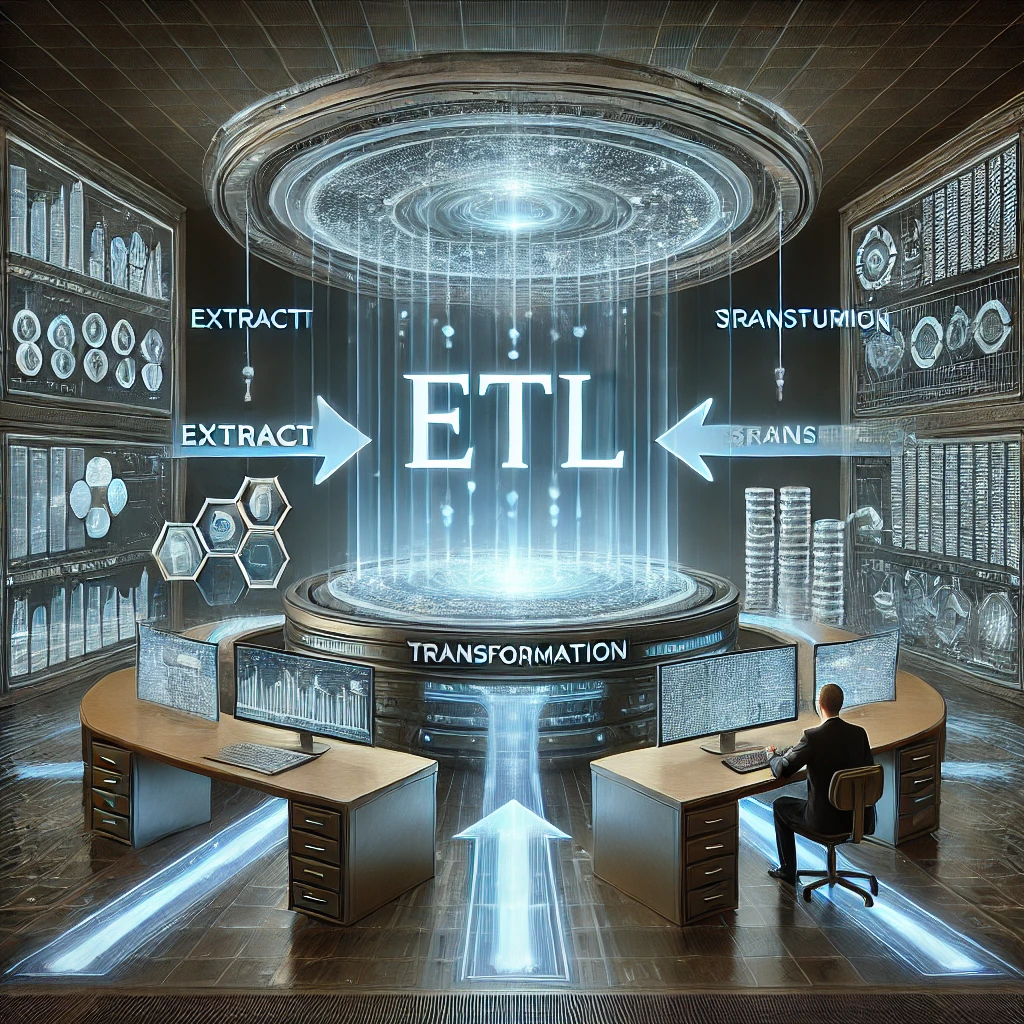
In today’s digital world, businesses generate vast amounts of data every day. But raw data by itself isn’t very useful—it needs to be organized, cleaned, and structured before it can provide meaningful insights. That’s where ETL (Extract, Transform, Load) comes in. If you’ve ever heard this term but weren’t sure what it means, don’t worry! This guide will break it down in simple, non-technical terms.
What is ETL?
ETL stands for Extract, Transform, Load, and it’s the process of moving data from one place to another while making it more useful along the way. Let’s use an analogy:
Imagine you run a small bakery and get ingredients from multiple suppliers. Before you can use them in your recipes, you have to:
1. Extract – Collect ingredients from different suppliers.
2. Transform – Clean, measure, and mix them properly.
3. Load – Store the prepared ingredients in your kitchen, ready for baking.
Now, think of data as those ingredients. ETL helps businesses gather data from different sources, clean and organize it, and then store it in a database where it’s easy to use.
Breaking Down the ETL Process
- Extract: Collecting Data
The first step is to gather data from different sources. These sources can include:
• Customer transaction records
• Website analytics
• Sales reports
• Spreadsheets and databases
Just like gathering ingredients from different suppliers, businesses need a way to bring all their data together in one place. - Transform: Cleaning and Organizing Data
Raw data often comes in different formats and may have errors. The transform step ensures data is:
• Cleaned (removing duplicates or errors)
• Formatted (converting dates, currencies, and other fields into a standard format)
• Combined (merging data from multiple sources to create a complete picture)
Think of this step as measuring, chopping, and mixing ingredients to prepare them for baking. - Load: Storing Data in a Usable Format
Finally, the cleaned and organized data is loaded into a database or a data warehouse, where businesses can access it for analysis. This makes it easy to create reports, track trends, and make better decisions.
Why Does ETL Matter?
Businesses rely on ETL to:
✔ Make informed decisions – Accurate and well-organized data helps companies identify trends and opportunities.
✔ Improve efficiency – Automating data collection and transformation saves time and reduces errors.
✔ Enhance reporting – Clean and structured data makes business reports more reliable and useful.
Conclusion
ETL may sound technical, but at its core, it’s simply about gathering, organizing, and storing data in a way that makes it useful. Just like a bakery needs well-prepared ingredients to create delicious treats, businesses need properly structured data to make smart decisions. If your company struggles with messy or scattered data, ETL can help streamline your information and unlock valuable insights.
Would you like to learn more about how ETL can benefit your business? Contact us today for a simplified approach to data management!